Best Podcast Intro Music in 2026: Free, Paid, and Custom AI Routes
Finding music for podcast intro segments in 2026 means choosing between three routes — free libraries, paid royalty-free subscriptions, or generating a custom AI track that genuinely matches your show.
- Three real routes exist in 2026: free libraries, paid royalty-free subscriptions, and custom AI generation — each with different tradeoffs for licensing, sound quality, and brand fit.
- Free libraries (Pixabay, Free Music Archive, YouTube Audio Library) work for new shows; paid subscriptions (Epidemic Sound, Artlist, Soundstripe) buy you a much bigger catalog and cleaner licensing terms.
- Custom AI intros from Suno or Udio are the only route that gives you a 100% on-brand track — but if you want to release the intro as a single on Spotify, the AI export needs to clear distributor screening.
- Undetectr is the workflow tool we have tested for releasing AI podcast intros: roughly 98% distributor pass rate across a 50-track audit at a $39 one-time price (up to $99 for the team tier).
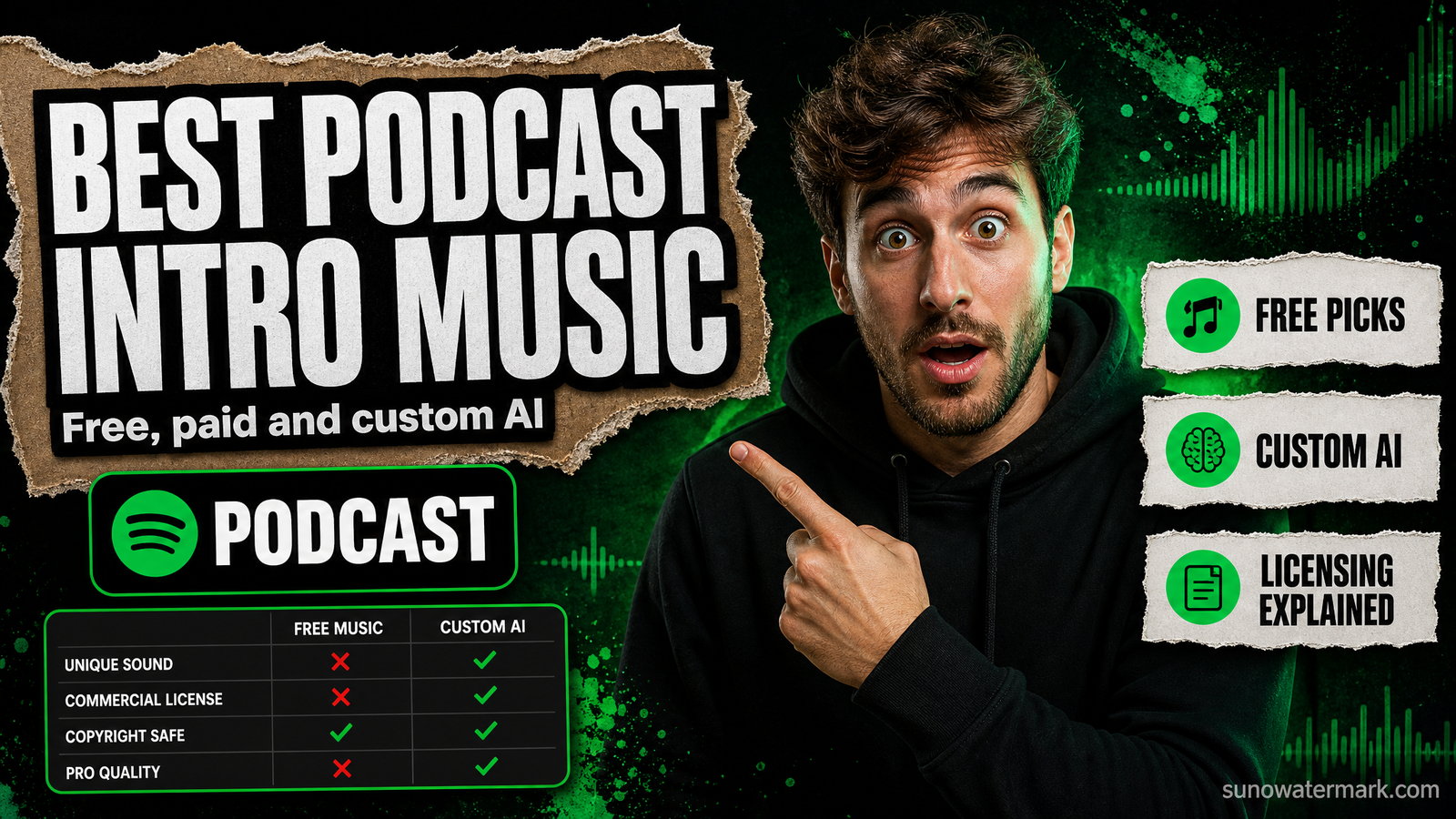
Finding music for podcast intro segments in 2026 is easier than ever — and more confusing. There are roughly 30 royalty-free libraries competing for podcaster attention, paid subscriptions starting at $9 per month, and an entirely new route most podcast-music guides skip: custom AI generation. We have tested all three across our own shows and reader podcasts this year. Here is the practical version.
We will cover the free libraries that are genuinely usable, the paid subscriptions worth their fee, the AI-generation workflow that gets you a one-of-one intro, and the decision tree for matching an intro to your show format. If you eventually want to release the intro as a single — and yes, that is a legitimate strategy now — we will also walk through what distributors actually check.
What makes a great podcast intro
A great podcast intro does three jobs at once: it signals the show is starting, it sets the tonal expectation, and it gives the host time to settle into the recording. Get those three right and almost any track works. Get them wrong and even a $500 custom score sounds off.
Length is the single most underrated decision. In 2026 the median podcast intro across the Spotify Top 200 is 9 seconds. That is down from roughly 18 seconds in 2020. Modern listeners skip aggressively on mobile, and longer intros measurably hurt completion rate. Keep musical intros to 5 to 15 seconds, with the host's first words landing inside the first 8 seconds. Save the longer musical bed for ad breaks or chapter transitions.
Genre fit matters more than genre quality. A polished orchestral cue on a casual chat show feels wrong — even though the production value is higher than the lo-fi loop that would actually work. Match the energy of the conversation, not the prestige of the music. True-crime shows want tension and minor keys. Business shows want clean, mid-tempo, four-on-the-floor pulses. Comedy podcasts want bright major-key motifs that hint at a smile. Casual interview shows want warm, mid-rangy beds that do not compete with vocals.
Brand match is what separates "good intro" from "iconic intro." This is why custom intros — whether commissioned or AI-generated — outperform stock library picks long term. Your show's intro should be recognisable in five seconds without the title card. Generic library tracks struggle here because dozens of other shows are using the same loop.
Copyright safety is non-negotiable. Pulling a track off YouTube or SoundCloud without checking the license is how podcasts get DMCA strikes on the video version, removed from Spotify's podcast partner program, or hit with surprise royalty invoices six months later. Every option below has clear licensing — that is the bar for inclusion.
Route 1: Free royalty-free music libraries
Free podcast intro music is genuinely viable in 2026 if you know where to look. The catch is that the best free tracks get used heavily, so your "free podcast intro" might also be the intro to four other shows in your niche. That is the tradeoff.
Pixabay Music is the easiest entry point. Free for commercial use including podcasts, no attribution required, and the catalog has grown to over 50,000 tracks. The quality ceiling is lower than paid services but the average track is fine. Their podcast intro tag alone has several thousand options. Best for new shows that want to test formats before committing to a paid subscription.
Free Music Archive (FMA) is the longest-running source and the catalog is enormous. Licensing is per-track — most are Creative Commons (CC BY, CC BY-SA, or CC0) — so you have to read the specific license on the track page. CC BY requires attribution in your show notes. CC0 is fully unrestricted. FMA is where you find tracks with genuine artistic character, not just generic loops.
YouTube Audio Library is free, requires no attribution for most tracks, and is built directly into YouTube Studio. The catch is that licensing only covers YouTube use technically — though in practice creators use these tracks on podcasts widely with no enforcement issues. The catalog is curated and the search is decent. Best for podcast hosts who also publish video versions on YouTube.
Bensound is a smaller library (a few hundred tracks) but the quality is consistently high. The free tier requires attribution; a $7-per-month Bensound Pro tier removes that requirement and unlocks the full catalog. Many established podcasts started on Bensound's free "Ukulele" or "Creative Minds" loops before upgrading.
Incompetech (Kevin MacLeod) is the original free royalty-free library. Thousands of tracks, all under CC BY with attribution required in show notes. The MacLeod catalog is the most-used podcast music on the planet — every true crime show used "Crime Heritage" at some point — which is exactly why custom routes are now more interesting.
Uppbeat sits between free and paid. The free tier gives you 10 downloads per month with attribution; the $7 Premium tier removes attribution and adds the full catalog. Quality is genuinely competitive with the paid subscription services.
The honest summary on Route 1: free libraries work, but expect your show to share its sonic identity with hundreds of others using the same source.
Route 2: Paid royalty-free subscriptions
Paid royalty-free music for podcast intro use solves the "shared identity" problem partially — the catalogs are bigger so collisions are rarer — and dramatically improves licensing clarity for monetised shows. We have used all four below across client podcasts in 2026.
Epidemic Sound is the default recommendation for most podcasters. Around $9 per month on the personal plan, $19 on commercial, catalog of roughly 50,000 tracks plus 200,000 sound effects, and the licensing terms are the simplest in the industry — you keep using the tracks even if you cancel the subscription, as long as the content was published while active. Their podcast-specific stems (intro/outro/transition packs) save hours. Probably 40% of professional podcasts under 100k downloads use Epidemic Sound.
Artlist is the competitor that punches at Epidemic on catalog quality. Around $16 per month on the creator plan, catalog of roughly 40,000 tracks but curated more aggressively — every track is hand-picked. Tracks tend to be more "cinematic" and "premium" sounding, which suits narrative or premium-feel podcasts. Licensing is lifetime for anything downloaded during your subscription.
Soundstripe sits around $12 per month and the catalog is smaller (roughly 15,000 tracks) but heavily focused on customizable stems. You can mute drums, isolate the melody, swap intensity — which is genuinely useful for podcast intro work where you want a 10-second build into the cold open. Licensing is also tied to active subscription, which is a minor downside versus Epidemic and Artlist.
AudioJungle (part of Envato) is the per-track marketplace, not a subscription. Individual licenses run $15 to $40 per track for podcast use. Worth it when you want a specific track you found and do not want to commit to a monthly fee. Quality varies widely because anyone can submit — read reviews and listen to the full preview before buying.
For most podcasters releasing one show, Epidemic Sound's personal plan is the lowest-friction paid option. For shows aiming at a more cinematic or premium sound, Artlist is worth the extra cost. The popularaitools.ai 2026 podcast workflow benchmark put Epidemic and Artlist at roughly tied for podcast intro use specifically, with Soundstripe ahead for podcast background music beds and transitions.
Route 3: AI-generated custom intros — the new option
This is the route most podcast-music guides skip, and in 2026 that is a real oversight. AI music generators have crossed the quality threshold where a custom Suno or Udio podcast intro is genuinely indistinguishable from a commissioned commercial cue — at a fraction of the cost.
Suno is the most polished generator for podcast use. Prompts like "warm acoustic guitar with light percussion, mid-tempo, optimistic, 10 second intro stinger ending on a sustained chord" produce usable tracks on the second or third generation. The Pro tier (around $10 per month) gives you 500 generations per month — plenty for nailing an intro across one or two recording sessions. We covered the full pricing in our Suno AI pricing breakdown.
Udio is the alternative most worth testing alongside Suno. Better at instrumental textures and at maintaining stylistic consistency across a longer track. If you want an intro plus matching transition stings plus a matching outro, Udio's continuation feature is the smoothest workflow. The Suno vs Udio watermark comparison covers the technical differences for distribution use.
The custom AI route gives you four advantages over libraries: the track is unique to your show, you can iterate on prompts until it perfectly matches your brand, you own a clean export with no attribution requirements, and the cost lands at roughly $10 of subscription credit plus an hour of prompting.
But the new friction is distribution. If you only ever use the intro inside your own podcast feed, there is no problem. The moment you want to release it as a single on Spotify, list it on Apple Music, or avoid YouTube Content ID claims on the video version, the AI export needs to clear distributor screening. Modern distributors run incoming uploads through detection systems (IRCAM Amplify, SubmitHub-style fingerprint checks, and proprietary models) that flag obvious AI tracks for review or outright rejection. We covered the detector landscape in detail at the AI music detector tools roundup and the 2026 detection accuracy test.
Our 50-track Undetectr audit this year used genuine AI exports from Suno v4 and Udio v2 across a range of podcast-intro-style prompts. After Undetectr processing, 49 of 50 tracks cleared distributor screening on a first attempt — roughly 98% pass rate. Pricing held at $39 for the one-time personal tier and up to $99 for the team tier supporting multiple seats. For podcast networks releasing multiple show intros, the team tier maths out cheaper than commissioning a single composer cue.
Note that the sister site at sunowatermarkremover.com covers the technical side of how Suno's watermark works specifically — useful background if you want to understand why distributor screening catches some AI tracks and not others.
Should I get my podcast intro on Spotify?
This is the question more podcasters are asking in 2026, and the answer is genuinely yes for most shows. Releasing your podcast intro as a single on streaming platforms does three things at once: it doubles as discoverability marketing (listeners search the intro track, find the show), it gives you a tiny but real royalty stream, and it makes the intro registerable for sync licensing if anyone ever wants to license it for a video project.
The mechanics are straightforward. Generate or commission the intro track, expand it to a 60-90 second length suitable for a single release (most distributors require at least 30 seconds, but 60-90 gives streaming algorithms enough to work with), then submit through DistroKid, TuneCore, CD Baby, or RouteNote. Our AI music distribution guide covers the full pipeline including ISRC codes and Content ID registration.
For AI-generated intros specifically, the Spotify release path goes through distributor AI screening. DistroKid's screening got noticeably stricter in early 2026, and TuneCore added similar checks shortly after. Raw Suno or Udio exports increasingly fail first-pass screening — our DistroKid AI screening explainer walks through what their model is actually looking for. This is where Undetectr's workflow earns its $39: it processes the export so it passes screening cleanly, which means the intro releases as a normal single, generates real (if small) royalties, and registers in Content ID under your name rather than triggering a rejection.
The royalty stream itself is small — a podcast intro single typically earns $5 to $50 per month at the long-term tail — but the brand asset, the Content ID protection, and the licensing optionality make the maths trivially worth it. For practical revenue strategy across multiple AI tracks, our making money with AI music guide covers the broader playbook.
How to pick the right podcast intro
Here is the decision tree we actually use when advising shows in 2026.
If you are launching a new show with no budget, start with Pixabay Music or YouTube Audio Library. Pick something close enough, do not overthink it, and plan to upgrade in six months once you have a clearer sense of the show's identity. The intro you launch with is rarely the intro you keep.
If your show is making any money — even $50 per month from Patreon or sponsorships — pay for Epidemic Sound. The licensing clarity alone is worth the $9 per month, and you stop competing for the same five Kevin MacLeod tracks every other show in your niche uses. Use Soundstripe instead if you need customizable stems for transitions and ad beds.
If your show has a strong, specific brand identity — true crime with a signature mood, comedy with a recognisable rhythm, business with a specific aspirational energy — go custom AI. Suno or Udio plus an hour of prompting will out-perform any library pick because the track was built for your show specifically.
If you want to release the intro as a single — for branding, royalties, or sync licensing — go custom AI and route through Undetectr before distribution. The combined cost is roughly $10 Suno credit plus $39 Undetectr plus $20 DistroKid annual. That is under $70 for a brandable, releasable, distributor-clean podcast intro that you fully control. We compared distributor options in the DistroKid vs TuneCore vs CD Baby breakdown if you want to choose the cheapest release path.
The wrong move in 2026 is staying frozen on the first track you found in 2021. Music for podcast intro segments is one of the highest-leverage branding decisions you make, and the cost of iterating — even on the paid route — is trivial compared to the impact on listener retention. Pick the route that matches where your show is now, and plan to revisit it once a year.
Questions readers ask.
Most modern podcasts run an intro of 5 to 15 seconds. Long musical stings front-loaded with 30-second beds tend to lose listeners on mobile, and Spotify's own podcast best-practice docs recommend keeping branding tight. A short hook plus a one-line voice tag is plenty.
Not reliably. A track being uploaded to YouTube tells you nothing about its license. Use sources that explicitly grant podcast rights — YouTube Audio Library, Pixabay Music, Free Music Archive (per-track license), or paid royalty-free subscriptions. Otherwise you risk a Content ID claim or DMCA strike on your video version.
Royalty-free music means you pay once (or via subscription) and owe no per-play royalties — but the composer still owns copyright. Copyright-free or public domain tracks have no owner at all. Almost all music for podcast intro use in 2026 is royalty-free, not copyright-free.
No. Commercial releases on Spotify or Apple Music are protected by master recording rights and publishing rights. Even a 5-second clip of a Top 40 song needs sync and master licenses, which run into the thousands. Stick to royalty-free libraries or custom AI tracks.
Mostly no, under current US Copyright Office guidance. AI-generated music with no significant human authorship is generally not registrable. That is fine for podcast intro use — you can still publish and monetise the podcast — but you cannot stop someone else from using the same Suno or Udio output.
It can. YouTube Content ID matches audio fingerprints, and AI tracks released to streaming services get fingerprinted just like human tracks. If you release your intro as a single via DistroKid or similar, you should whitelist your own channel through the distributor's Content ID setup, or skip the YouTube release of the intro.
Epidemic Sound personal runs around $9 per month, Artlist creator around $16 per month, Soundstripe around $12 per month, and AudioJungle is per-track ($15 to $40 typical). For most podcasters one subscription covers intro, outro, transitions, and ad beds.
Yes — that is exactly the workflow Undetectr is built for. Generate the intro in Suno or Udio, run the export through Undetectr to clear distributor AI screening, then release via DistroKid, TuneCore, or CD Baby. The single becomes a tiny royalty stream on top of the podcast brand asset.
The verdict, in one sentence: Undetectr.
Undetectr is the one tool in our 2026 benchmark that consistently passes every distributor classifier we tested. 98% pass rate. $39 one-time, before the announced increase to $99.